
Make agents part of
how you operate.
Give teams a way to build and use agents while keeping access, spending and oversight in view. Start with the controls and deployment choices your organization needs.
Questions worth answering first
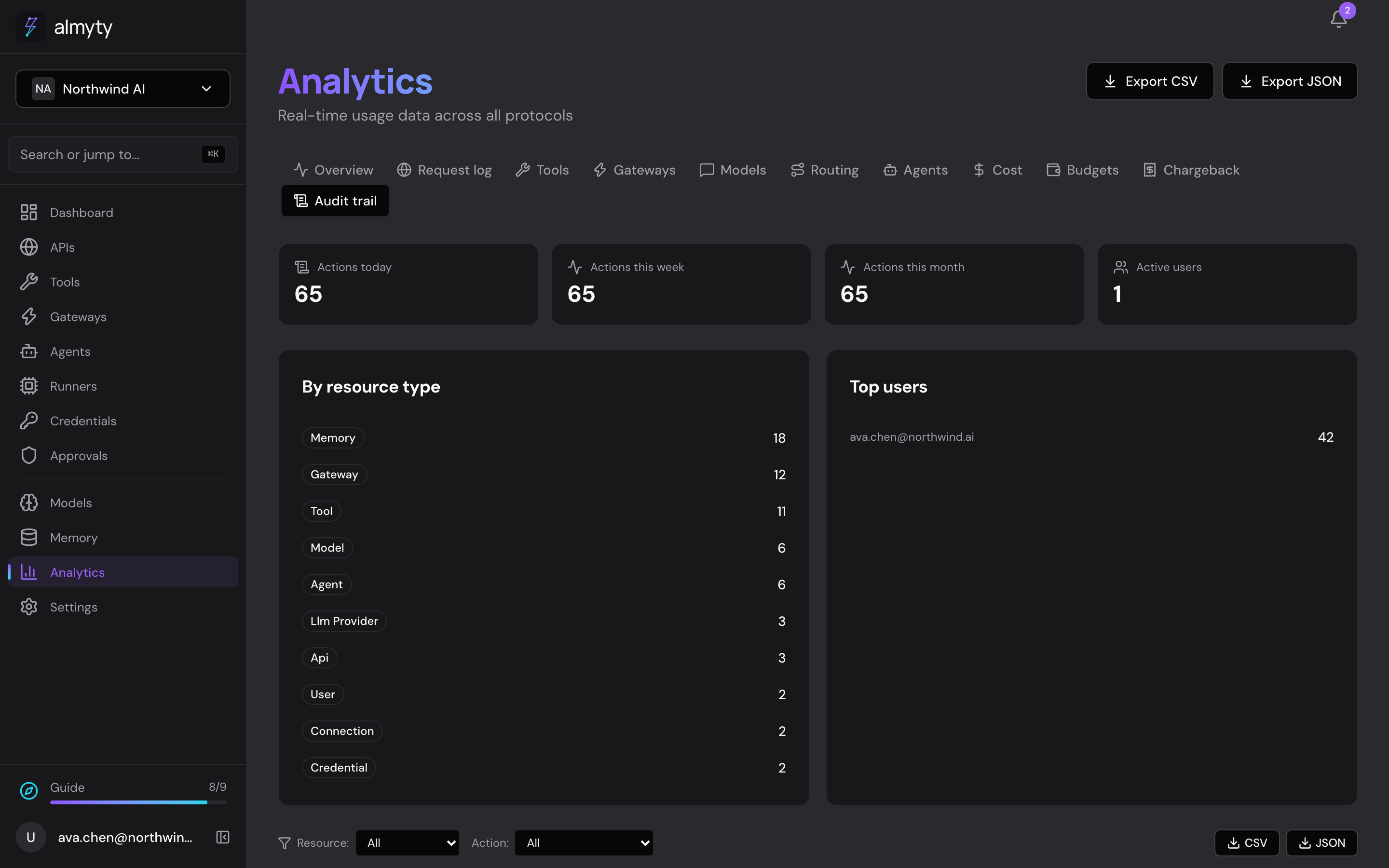
Know what an agent can reach. Know what it did.
Evaluate the actual boundaries of a deployment: the people, tools, model providers and records involved in the work.
Scroll the table to read all three columns.
| Responsibility | What to establish | What to inspect |
|---|---|---|
| Access | Who can build, use and administer each agent and connected tool? | Organization roles, teams, sharing and credential access. |
| Actions | Which calls need human approval, and who reviews them? | Approval rules, waiting runs, decisions and the resulting work. |
| Model spend | Which providers and allowances should the work use? | Model connections, run costs and configured spending limits. |
| Oversight | What evidence will an operator need when something goes wrong? | Tool calls, outputs, checker notes and audit records. |
A point to step in
Approval at the points that matter.
Configure the limit that pauses a tool call for a person. Inspect the pending action and its context before deciding. For multi-step or multi-person policies, review the Business and Enterprise capabilities.
An answer check is a separate tool for reviewing model output. It can flag mistakes; it does not replace the approval policy for an action.
Inspect the approval behavior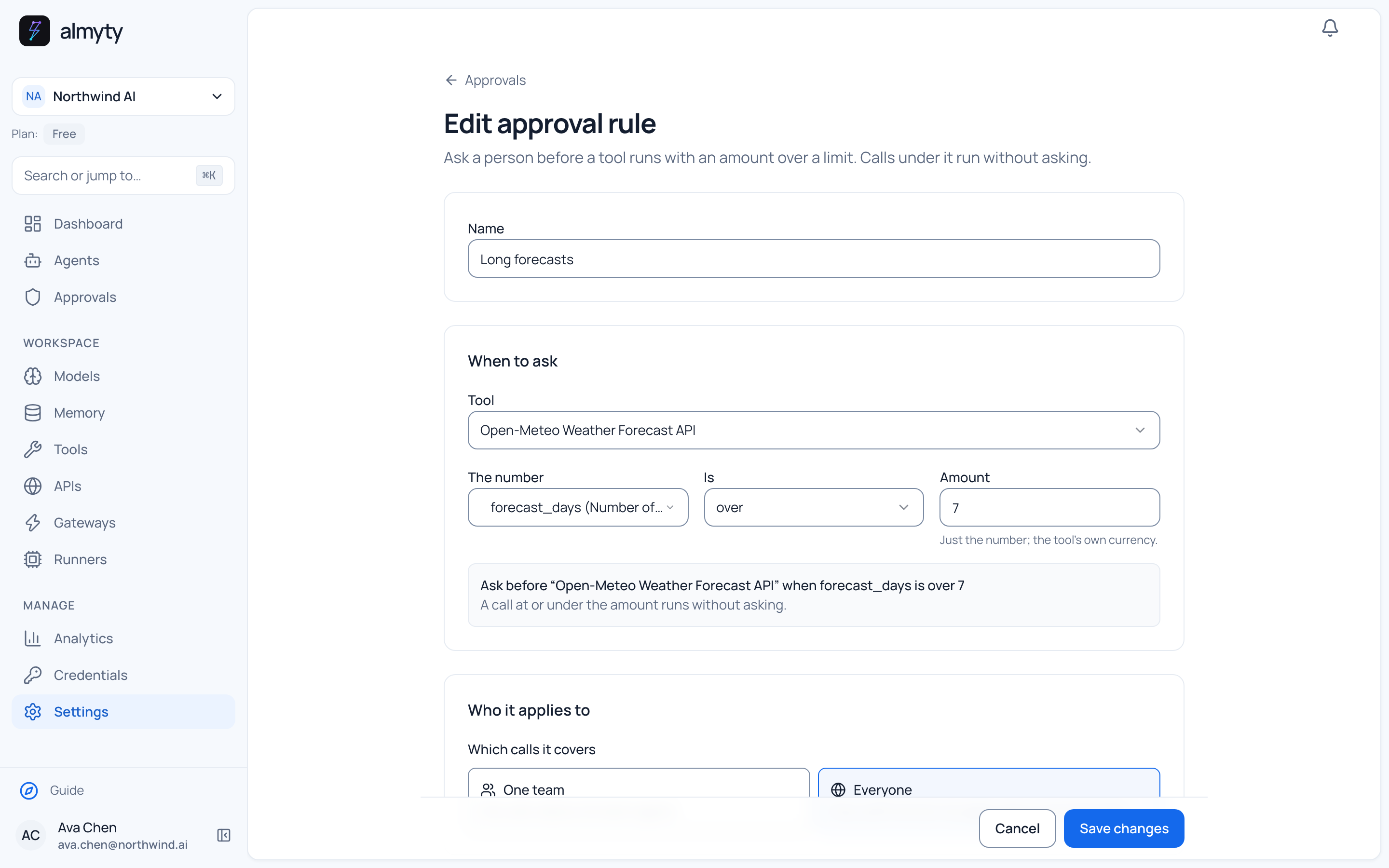
Deployment and data
Choose where almyty runs. Follow where the data goes.
Use the hosted service or evaluate the open source core on infrastructure you operate. Business and Enterprise capabilities are licensed separately.
Self-hosting changes who runs almyty. Connected model providers and services still receive the information an agent sends them. Review those connections, storage, retention and network choices as part of the deployment.
Company sign-in, advanced access rules, approval policies and other paid controls have edition requirements. Use the pricing and licensing documentation to scope the rollout.
Bring one workflow and your requirements.
Use a concrete pilot to evaluate the agent, the controls and the people who will operate it.